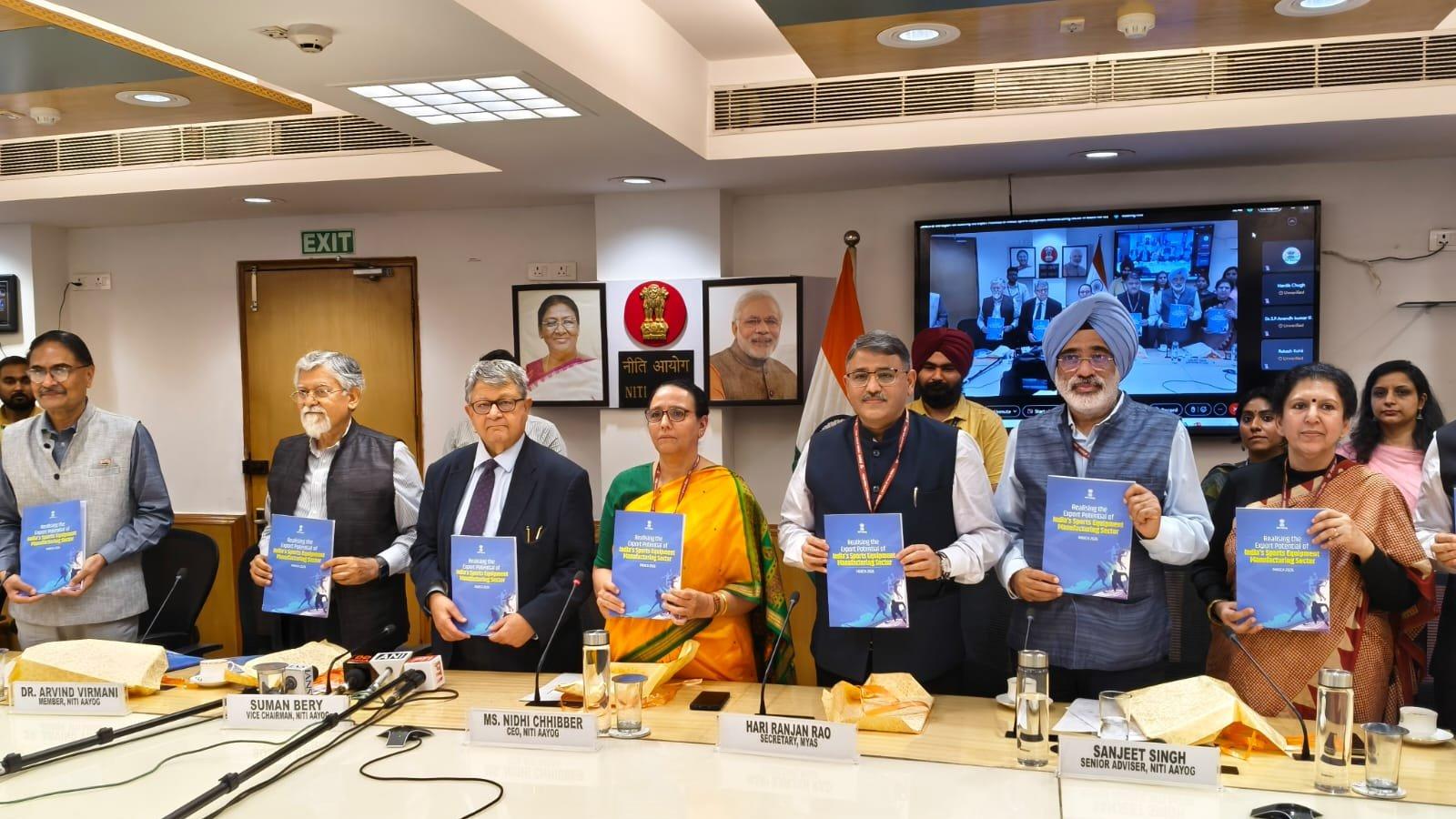
Realising the Export Potential of India’s Sports Equipment Manufacturing Sector
India has built a $275 million export industry on craftsmanship alone. With the right conditions, it could be ten times that.
This report analyses India's sports equipment manufacturing sector — mapping the global market landscape, assessing India's competitive positioning across manufacturing groups and identifying supply- and demand-side challenges. It offers strategic prioritisation of export-ready categories and actionable recommendations to unlock India's potential as a supplier of quality sports equipment to the world.
Contributors to the report:
 Mr. Piyush Doshi, Operating Partner
- Ms. Lakshita Mehrotra, Senior Team Lead
- Mr. Shreyas Shivam, Consultant
- Ms. Avanti Nayal, Programme Associate
The numbers are more surprising than you think
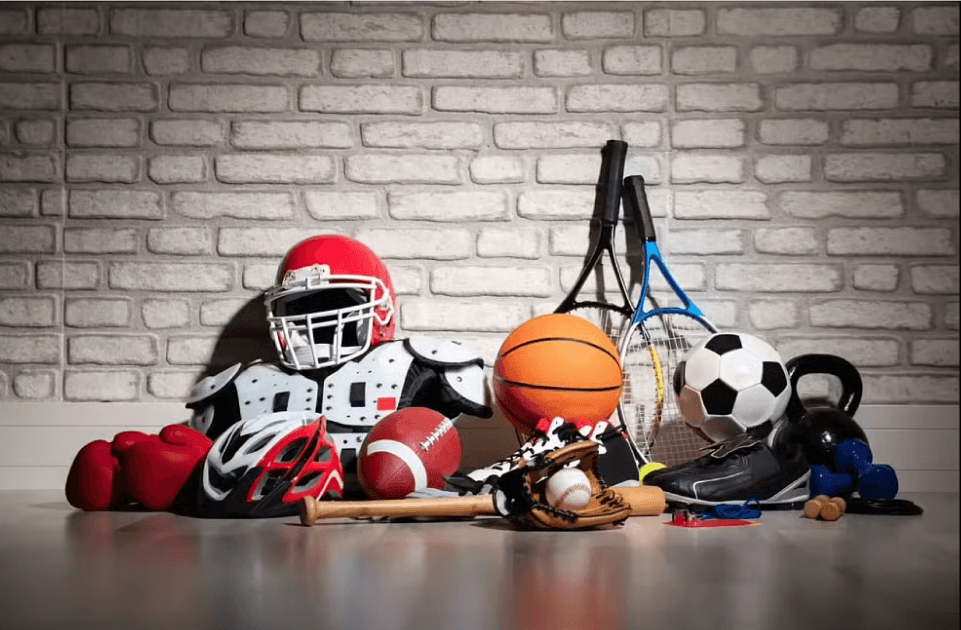
Sporting goods are specialized equipment, apparel, footwear, and accessories designed for playing sports, engaging in athletic activities, or recreational exercise. These items, which act as commodities, include items like basketballs, yoga mats, protective helmets, and specialized jerseys.
Most people assume India is a mid-sized player in global sports goods. The reality is more complicated and more interesting. Here are four questions to test your assumptions.
India's sports goods industry is older than the country itself
Understanding where things stand today means going back to where it all started and why the sector has stayed where it is for so long. Here are the facts that frame the opportunity.
A Legacy Older Than Partition
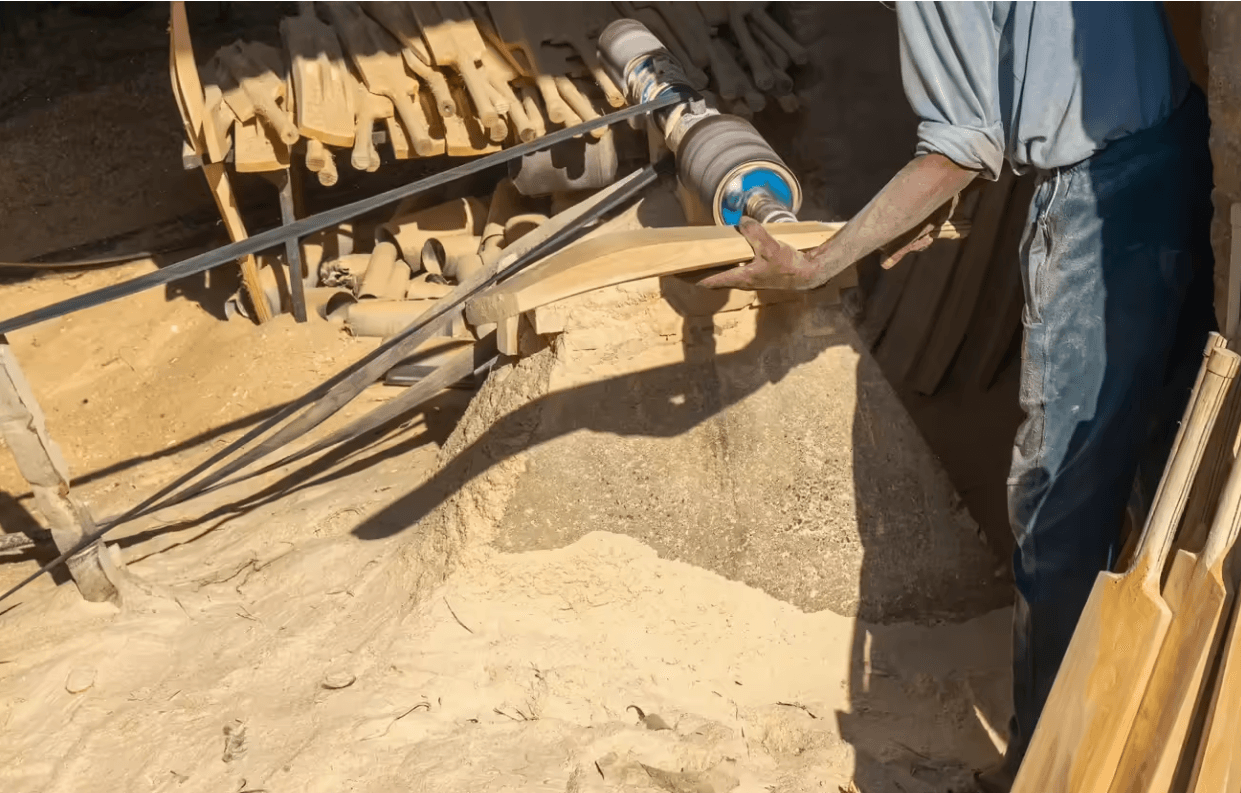
India's sports goods manufacturing traces its roots to Sialkot (now in Pakistan). Post-partition, artisans and manufacturers resettled in Meerut and Jalandhar, establishing clusters that remain the backbone of the sector today — producing everything from hockey sticks to inflatable balls.
Read more here→₹500 Crore — A Historic First
For the first time in India's budgetary history, sports goods manufacturing received a dedicated allocation of ₹500 crore in the Union Budget — a turning point in policy recognition of the sector's export potential.
Read the Budget Notification→Meerut & Jalandhar, The Twin Engines
Jalandhar (Punjab) and Meerut (Uttar Pradesh) form the backbone of the sports goods manufacturing ecosystem, together comprising approximately 250+ exporting units, 1,000+ domestic-market-focused units, over 4,000 micro enterprises, and nearly 20,000 household units.
Read more here→China has 47.9% of the market. India has 0.5%. Vietnam closed a similar gap in ten years.
China built its dominance through vertical supply chains, port infrastructure, and relentless investment in manufacturing technology. Economies like China, Vietnam and Taiwan have carved out a dominant niche for themselves. India has the skills. It hasn't yet built the system around them.
India excels in cricket equipment and rugby manufacturing. It possesses strong capabilities in athletic equipment and inflatable balls, but lags China and Pakistan due to high duties on crucial inputs, inefficient in-land transport etc. Due to lack of tech know-how & absence of a robust R&D ecosystem, Indian manufacturers have also not diversified into categories like fitness equipment, racket sports.
India thus shows high potential for growth, especially given its market share stagnation v/s Vietnam since 2014.
Percentage Share in Global Exports (2014–24)
Click legend to show/hide countries
China
Makes almost everything, at scale, cheaply. Its share peaked at 49.5% in 2020 and has settled back to 47.9% — still nearly half the entire global market. China dominates due to export facilitation regions near ports, and localized supply ecosystem that reduces raw material costs, etc.
USA
USA is the largest consumer of sports goods and is also the largest importer with 5.8% export share.
Taiwan
Down from 6.4% in 2018 to 4.2% now. Taiwan specializes in high-end premium manufacturing, especially in bicycles backed by strong R&D/supply chain ecosystems present in manufacturing clusters.
Vietnam
Up from 0.8% in 2014 to 2.7% in 2024. While Vietnam grew 3x due to its FTAs (CPTPP, EVFTA), cheaper acquisition of raw materials from China, growing global brand presence (capitalized on China +1 strategy) etc.
India
Flat at 0.7–0.5% for a decade, even as Vietnam went from 0.4% to 2.7% in the same timeframe. What Vietnam leveraged that India didn't — FTA access, port proximity, structural enablers— is exactly what this report addresses.
This report emerged from months of engagement with manufacturers, exporters, brand owners, industry bodies, and policymakers. From factory floors to boardrooms.
We have had dedicated consultations with 20 manufacturers across categories, interacted with several more through 5–6 roundtable conferences, visited 10 factories to understand the ground-level challenges and strengthened our findings through the EPC, taskforce and industry association inputs.
Understood the opportunity in the market and key competing countries
Desk research to map the competitive landscape, understand where India stands globally in sports goods manufacturing, and build ambitious targets.
- Market sizing across key sports goods export categories
- Benchmarked India vs. China, Pakistan and Taiwan
- Identified strategic gaps and high-potential opportunities
Stakeholders
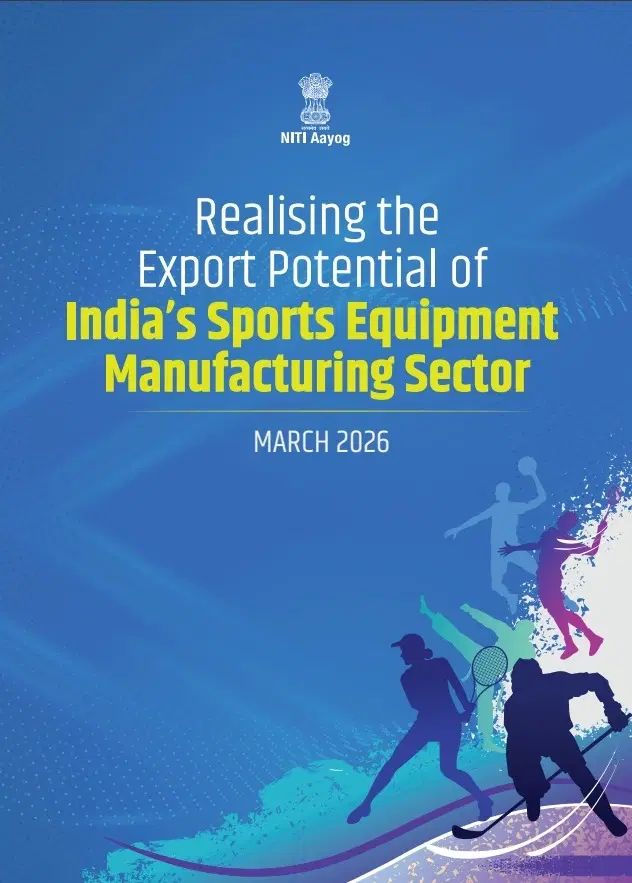
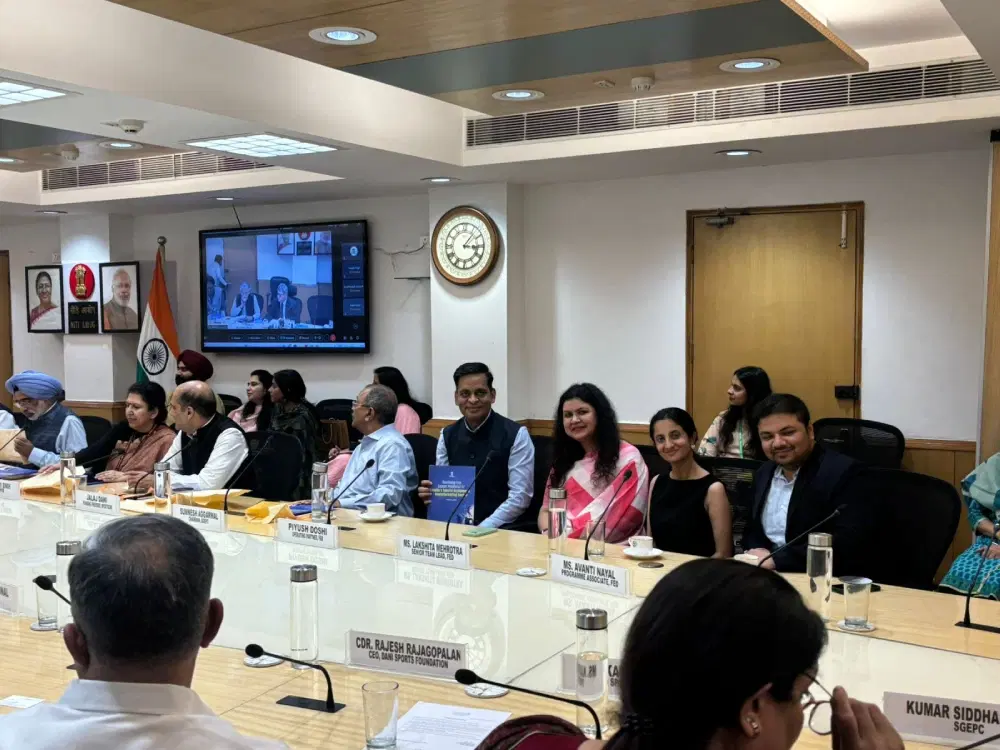
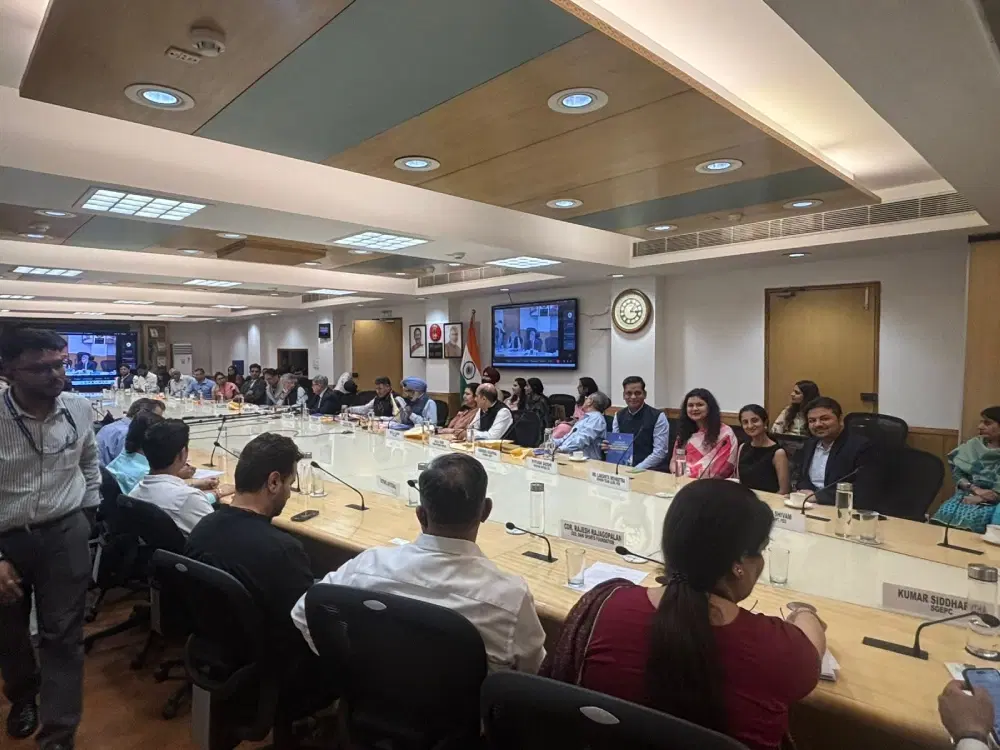
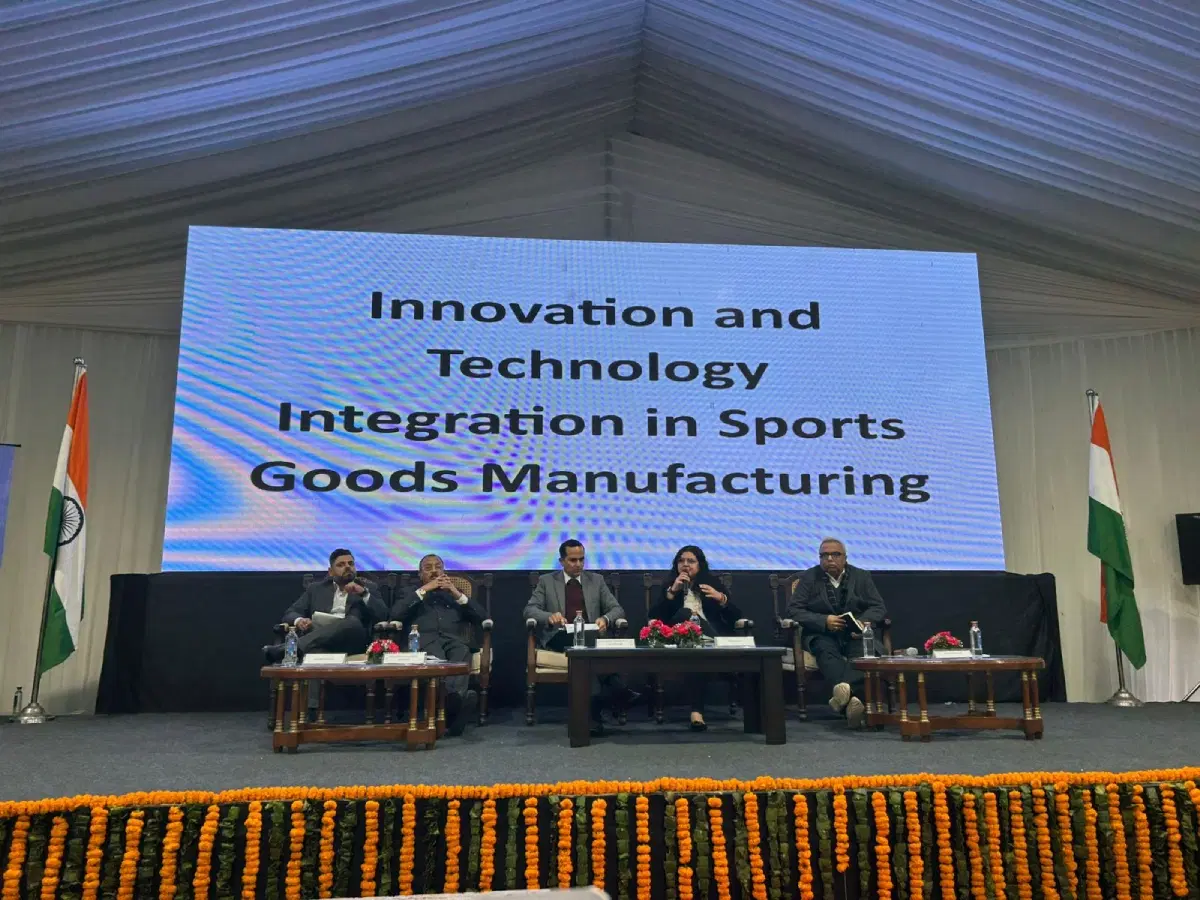
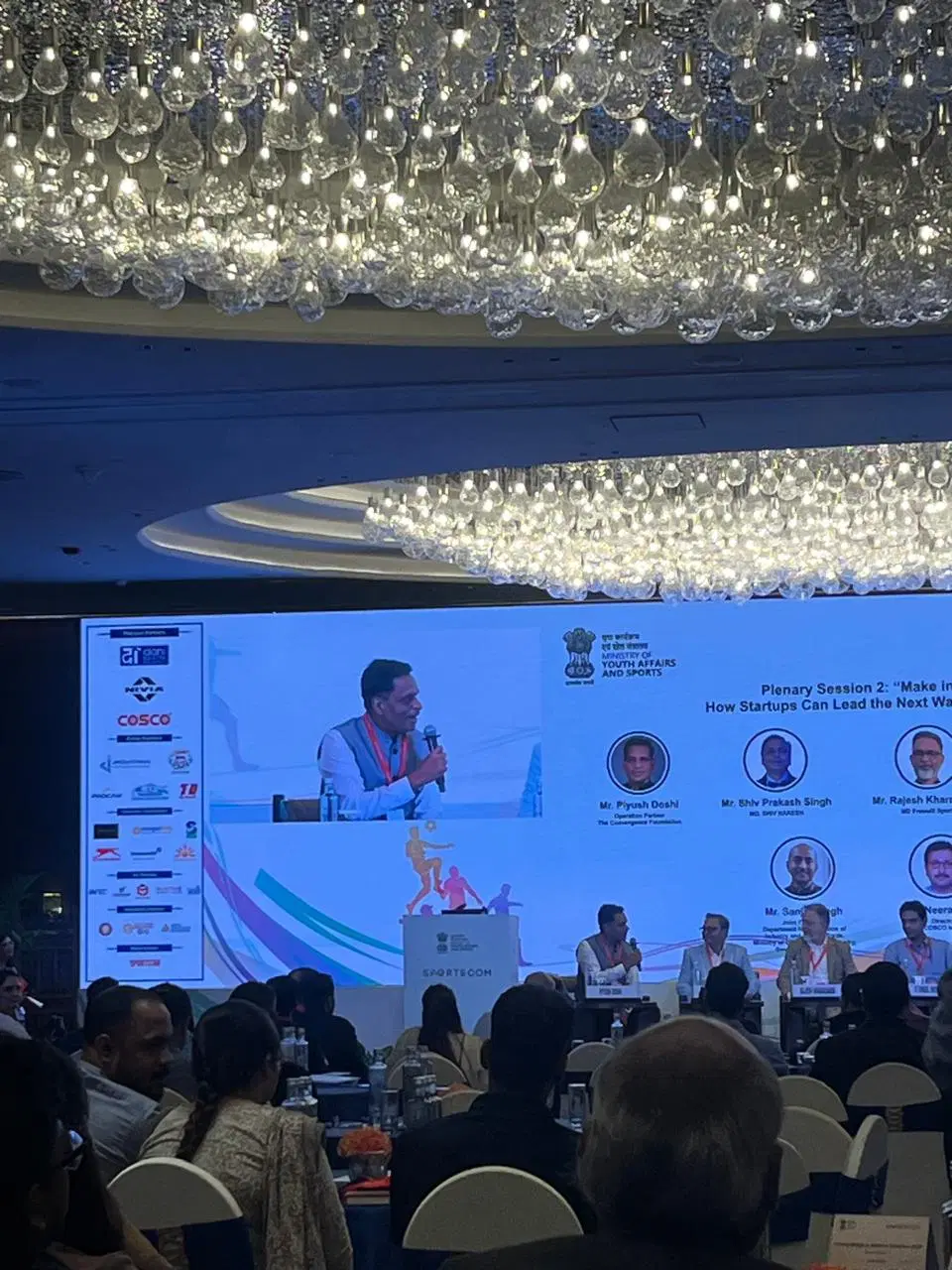
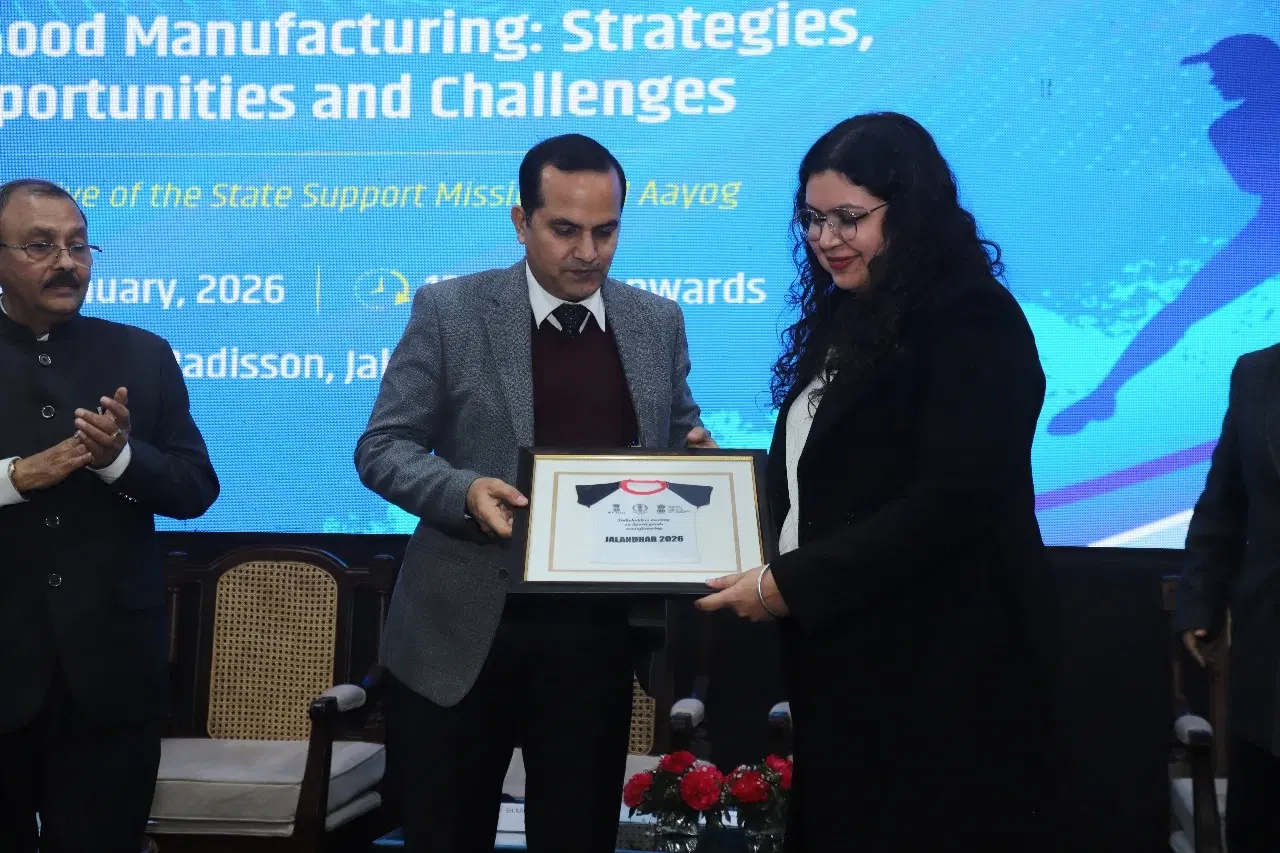
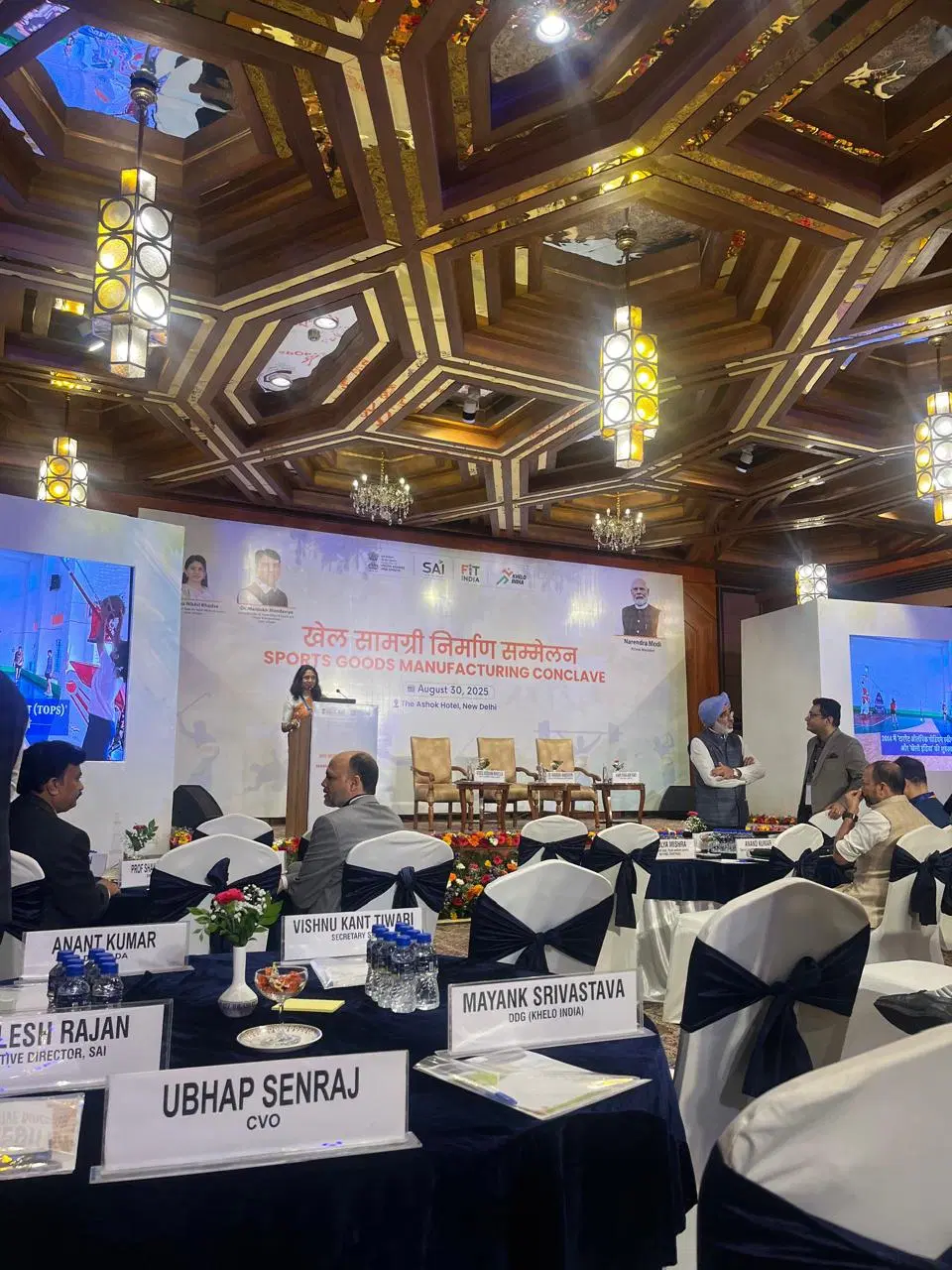
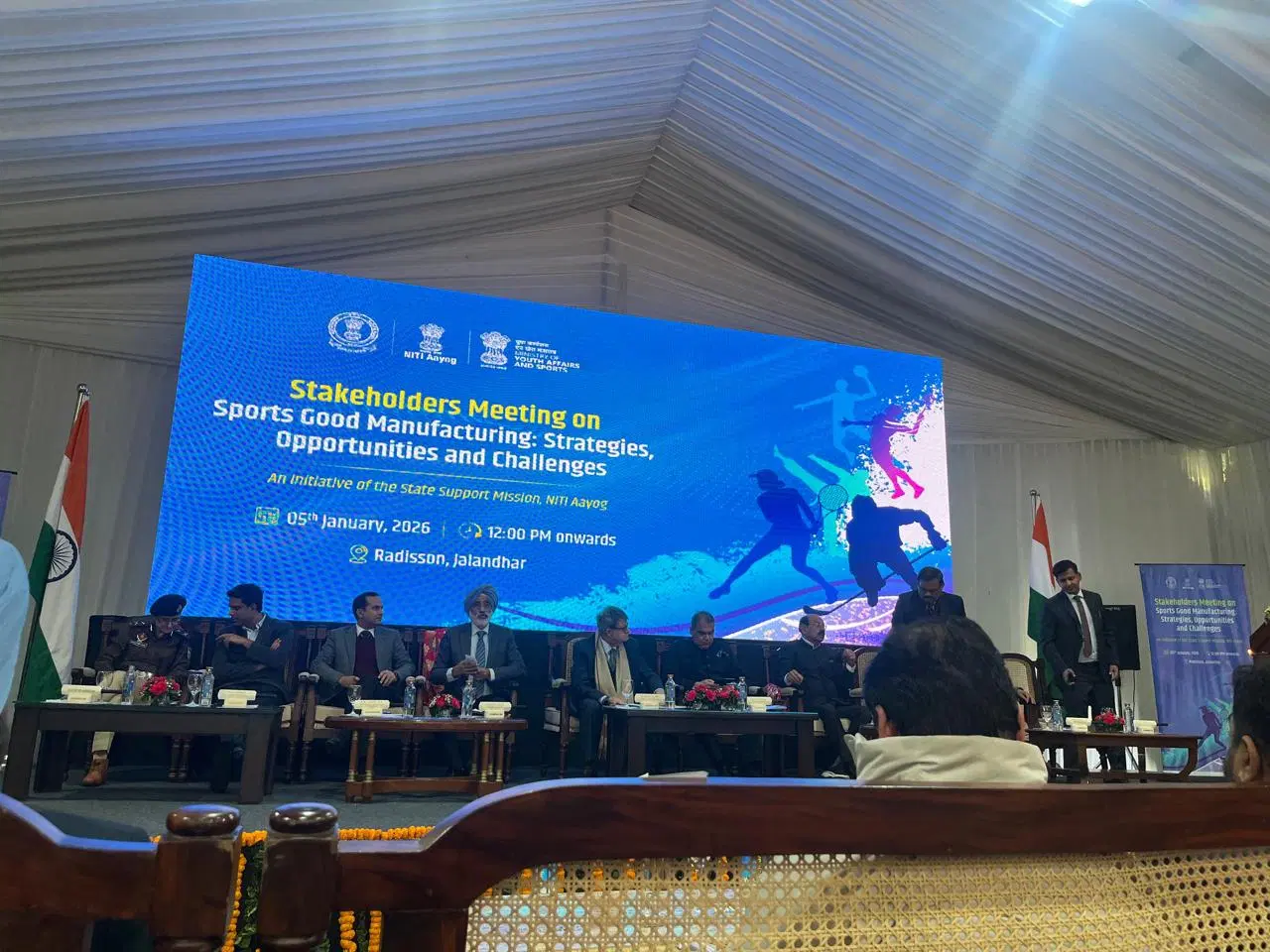
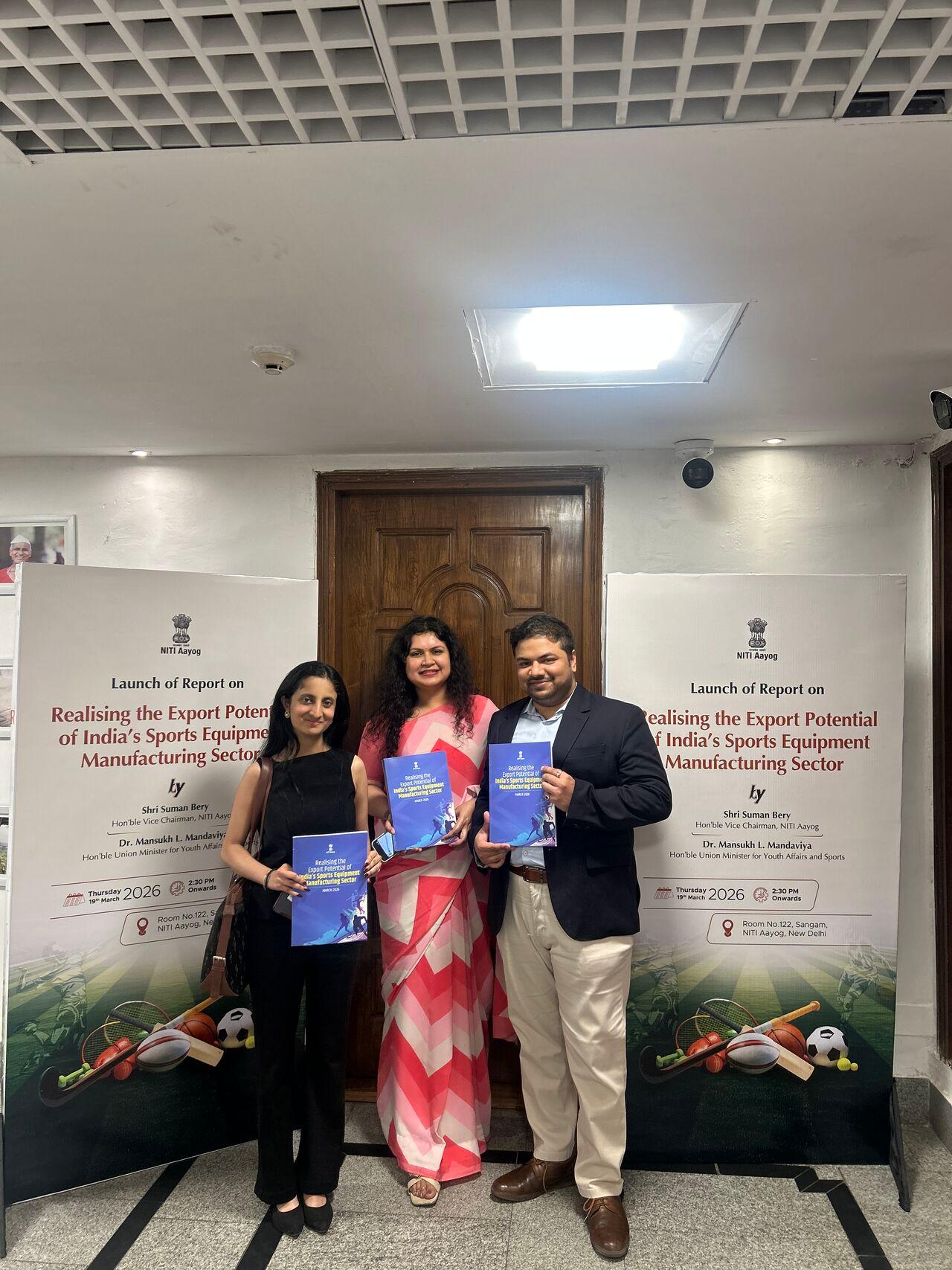
Highlights from the Sports Goods Manufacturing Conclave — Conversations, Insights and Industry Collaboration
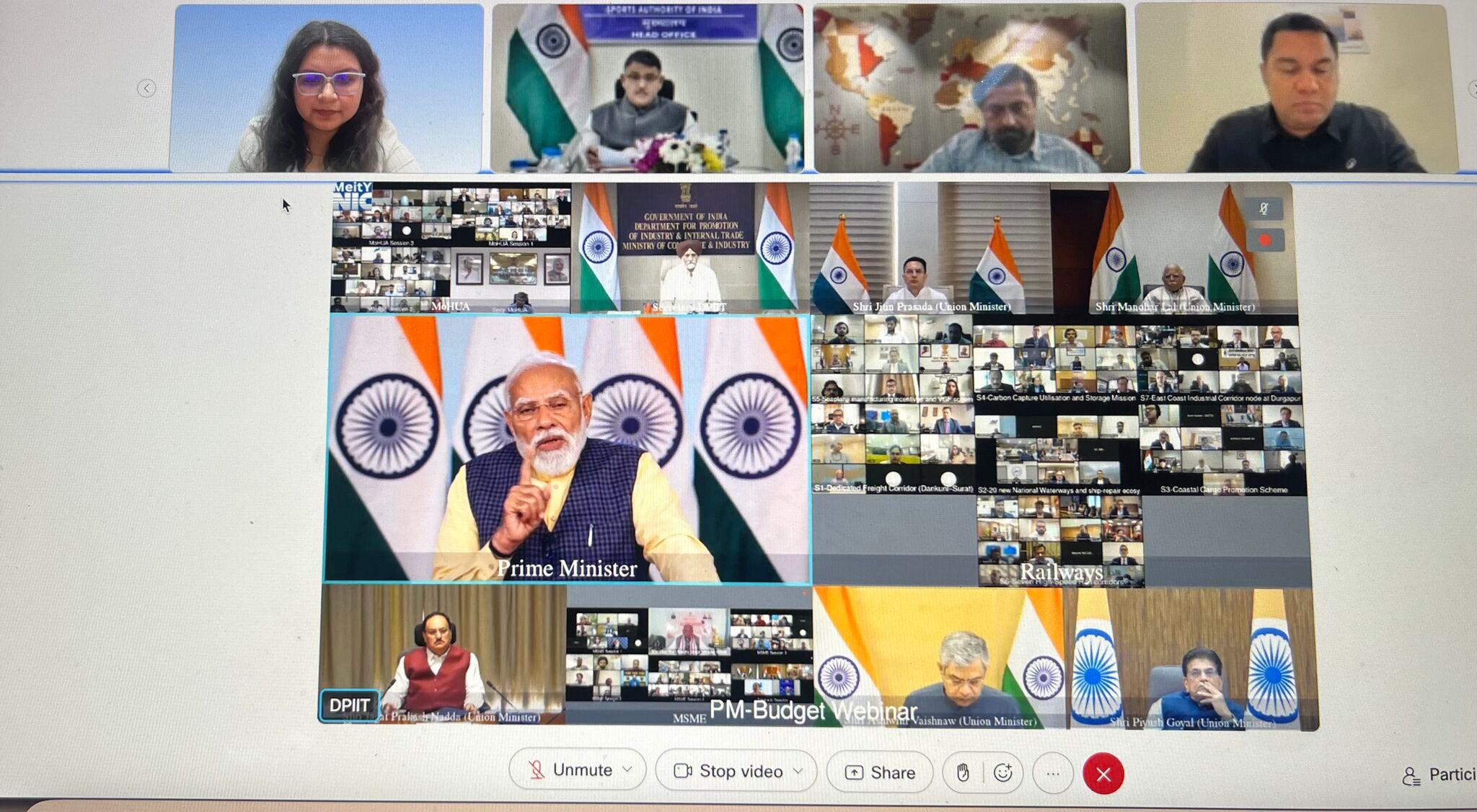
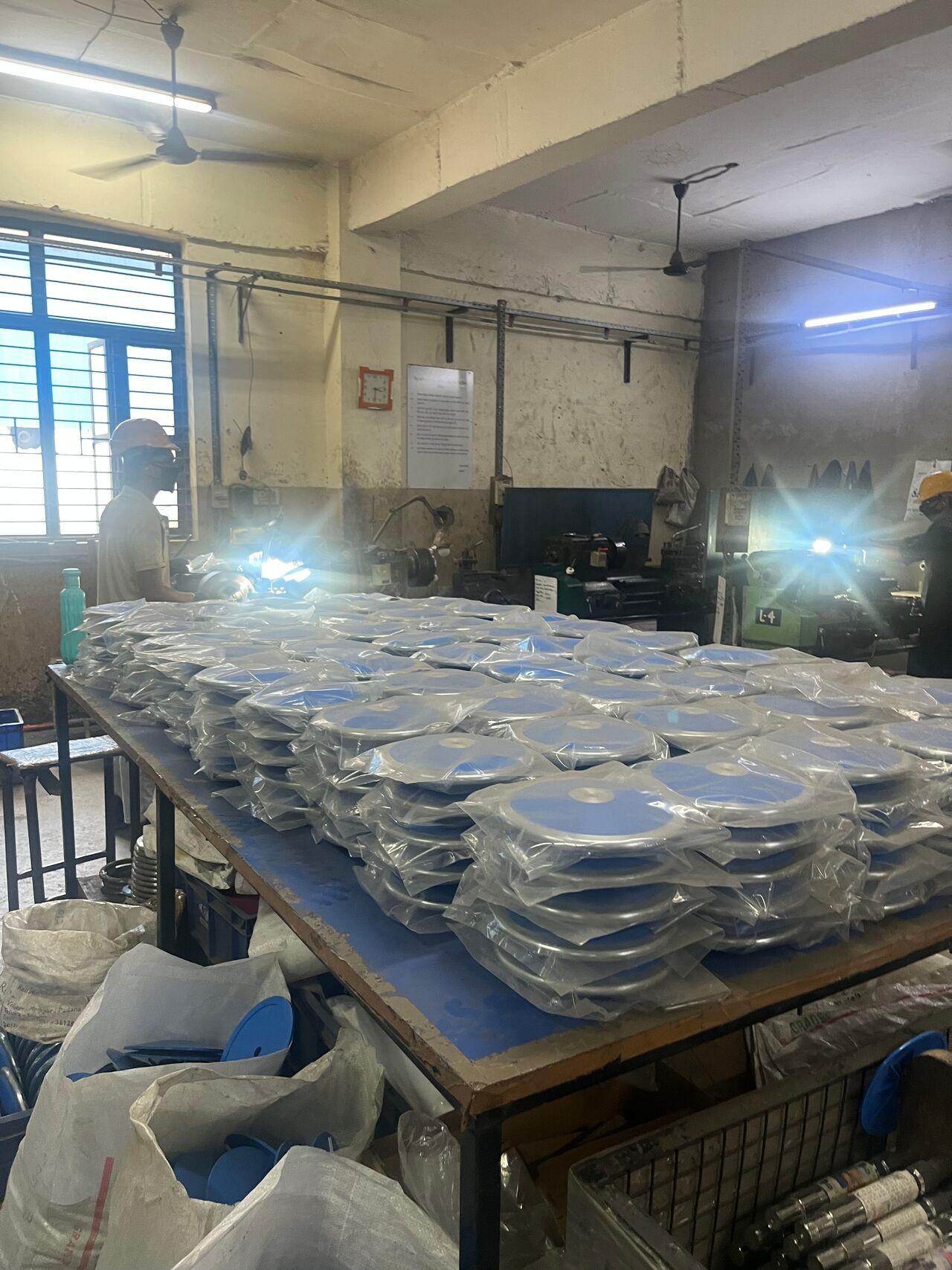
The bottlenecks between India's manufacturing heritage and its global export share are structural
Both supply-side constraints and demand-side weaknesses combine to keep the sector from reaching its potential.
The report identifies a prioritised set of actions to systematically close the gap and promote India towards a higher global market presence.
Closing India's cost gap with Asian peers requires fixes including rationalising import duties, easing machinery access etc. supplemented initially by targeted fiscal support for MSMEs, certification, and bulk procurement.
Long-term competitiveness hinges on greenfield cluster development in port-proximate states, upgraded legacy clusters, domestic raw material ecosystems for multi-use materials like carbon fibre, and world-class testing infrastructure.
On the demand side, a unified Brand India framework anchored by government, anchor brands, federations, and corporates must build global credibility and market pull to position India as a quality supplier of sports equipment.
Expand the definition of sports goods
Beyond core equipment to include footwear, apparel, and accessories
Rationalize duties on imported RMs
Ensure global price parity and build domestic ecosystems for advanced sports material inputs e.g. PU/TPU, EVA, carbon fiber, etc.
Streamline duties, GST & customs
Rationalize duties, GST, and streamline customs procedures for export-linked machinery, inputs, and sports goods
Develop port-proximate clusters
Develop integrated, port-proximate sports goods clusters with shared labs and improved logistics
Extend textile & footwear incentives
Extend textile/footwear incentives to sports goods manufacturing given their adjacencies
Targeted MSME scaling support
Technological upgrades, certification co-funding, and branding support for small and medium manufacturers
Leverage marquee events
Use CWG 2030 and Olympics 2036 to showcase 'Made-in-India' products for branding and global visibility
The conversation is picking up
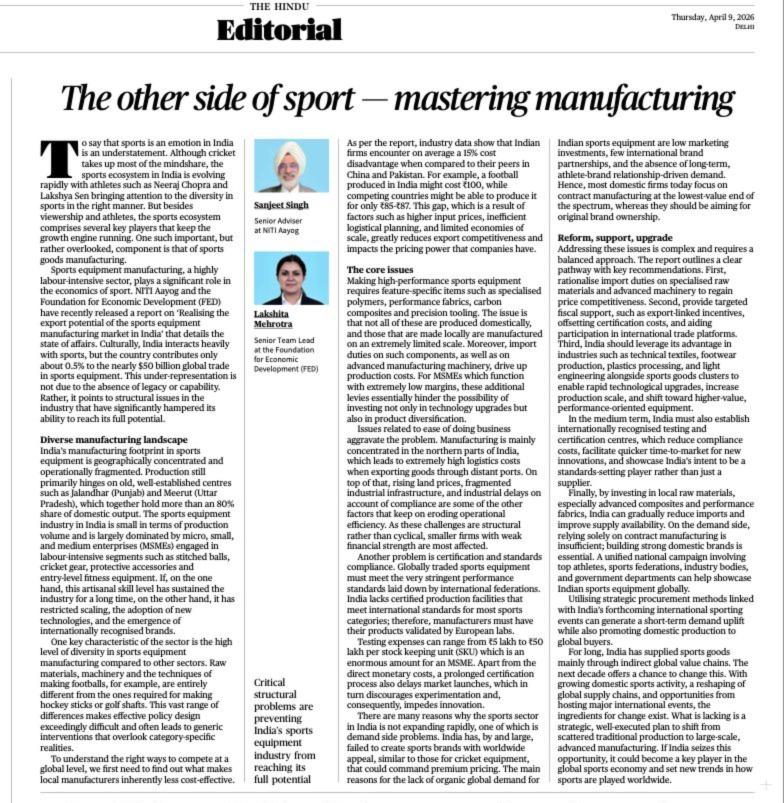
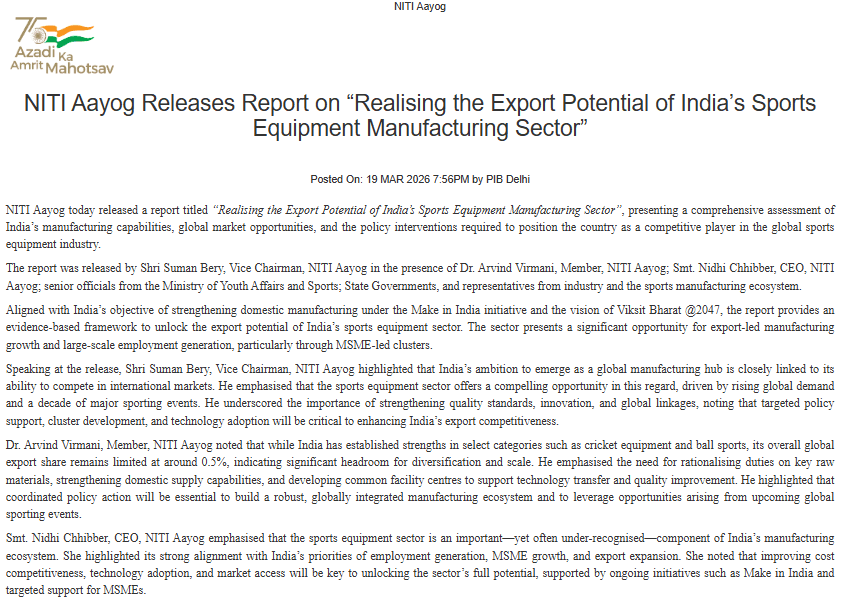
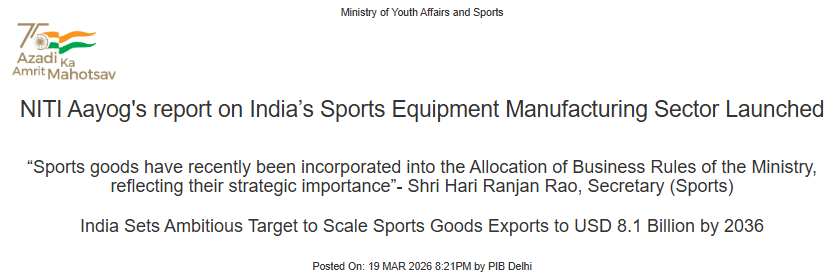
As the conversation around India's sports equipment sector gains momentum, follow the latest coverage, op-eds, and research updates from leading publications and policymakers.